

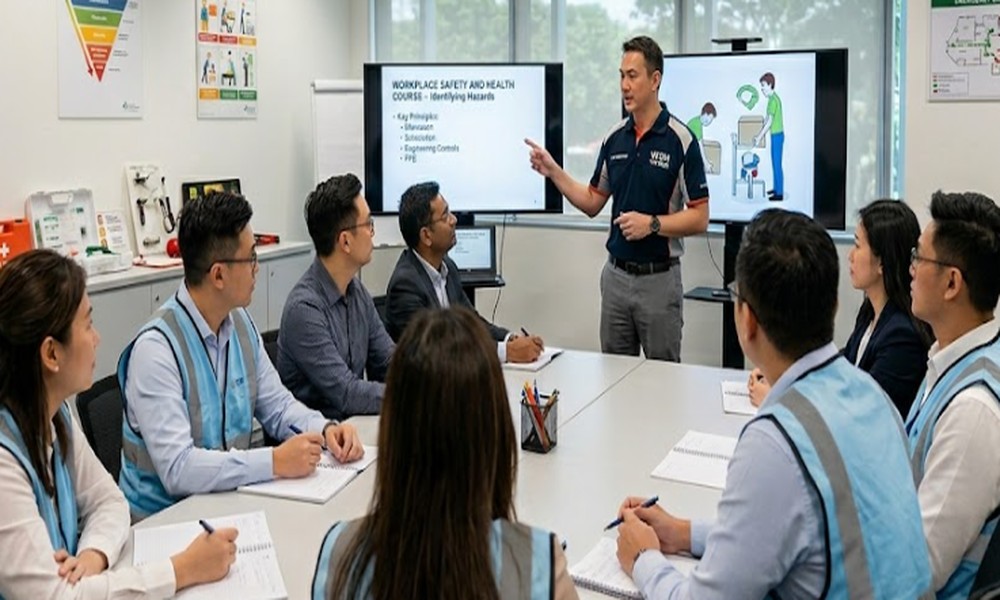
A workplace safety and health course in Singapore is a structured training programme designed to equip workers and supervisors with the knowledge to prevent workplace accidents, comply with regulations, and manage risks effectively. In Singapore, such courses are aligned with Workforce Skills Qualifications (WSQ) frameworks and regulated by relevant authorities to ensure consistent safety standards across industries.
These courses are commonly required in sectors such as construction, manufacturing, logistics, and facilities management. Completing the training supports compliance with workplace safety and health regulations and helps organisations maintain safer working environments.
What Is a Workplace Safety and Health Course in Singapore
A workplace safety and health course in Singapore refers to formal training that teaches individuals how to identify hazards, assess risks, and implement safety measures in the workplace. These courses are typically aligned with national standards and frameworks such as WSQ.
The primary purpose of such training is to reduce workplace incidents and ensure that employees understand their responsibilities under Singapore’s safety regulations. Participants are trained to recognise unsafe conditions, follow safe work procedures, and contribute to a culture of safety.
These courses are often mandatory for certain roles, particularly those involving higher risk environments such as construction sites or industrial operations.
Why Workplace Safety and Health Training Is Required
Workplace safety and health training is required to ensure that both employers and employees understand their obligations under Singapore’s Workplace Safety and Health Act. The law emphasises prevention and shared responsibility in maintaining safe workplaces.
Training is important because it supports several key outcomes:
- Reduces workplace accidents and injuries
- Ensures compliance with regulatory requirements
- Improves awareness of safety procedures
- Promotes accountability among workers and supervisors
Organisations that prioritise safety training are more likely to maintain consistent operations and avoid disruptions caused by workplace incidents.
Types of Workplace Safety and Health Courses Available
Different workplace safety and health courses are designed for various roles and levels of responsibility. These courses address specific job requirements and industry risks.
The most common types include:
- Basic workplace safety and health courses
These courses are designed for new workers and provide foundational knowledge on hazard identification and safe work practices. - Supervisory safety courses
These programmes train supervisors to manage safety procedures, conduct risk assessments, and enforce compliance on-site. - Industry-specific safety training
These courses focus on sectors such as construction, marine, or manufacturing, addressing hazards unique to each industry. - Advanced safety and health courses
These programmes are intended for safety officers and professionals responsible for implementing organisational safety systems.
Each course type is structured to match the participant’s level of responsibility and the complexity of workplace risks.
Overview of WSQ Workplace Safety and Health Certification
WSQ workplace safety and health certification is a nationally recognised qualification framework in Singapore. It ensures that training programmes meet consistent standards across different industries.
The WSQ Certificate in Workplace Safety and Health typically covers essential competencies required for safe work practices. These include hazard identification, risk assessment, and incident reporting.
The course may be delivered through:
- Classroom-based learning
- Asynchronous e-learning modules
- Blended learning formats combining both methods
This flexible delivery allows participants to complete training while managing work commitments.
Key Topics Covered in the Course
A workplace safety and health course in Singapore includes a structured curriculum focused on practical safety knowledge. The content is designed to be applicable across different industries.
The core topics generally include:
- Workplace safety and health regulations in Singapore
- Hazard identification and risk control measures
- Safe work procedures and practices
- Incident reporting and investigation
- Personal protective equipment (PPE) usage
These topics ensure that participants can apply safety principles in real-world scenarios and contribute to safer work environments.
Who Should Take This Course
A workplace safety and health course is suitable for individuals working in environments where safety risks are present. It is also relevant for those responsible for managing workplace safety.
The course is typically required for:
- Workers in construction, manufacturing, and logistics
- Supervisors overseeing operational teams
- Safety coordinators and site personnel
- Individuals entering industries with regulated safety requirements
Employers may require staff to complete this training before allowing them to perform certain tasks or enter specific work areas.
Entry Requirements and Eligibility
Eligibility for a workplace safety and health course in Singapore depends on the course level and training provider. Most basic courses have minimal entry requirements, making them accessible to a wide range of participants.
Common requirements include:
- Basic literacy and understanding of English
- Minimum age requirement (usually 18 years old)
- Employment or intention to work in a relevant industry
Advanced courses may require prior certification or work experience in safety-related roles.
Training Format and Learning Methods
Workplace safety and health courses are delivered using different learning formats to accommodate various schedules and learning preferences.
The most common formats include:
- Classroom training
Instructor-led sessions that provide direct interaction and guided learning. - Asynchronous e-learning
Self-paced modules that allow participants to study at their convenience. - Blended learning
A combination of online learning and in-person sessions for practical application.
These formats ensure flexibility while maintaining the quality and consistency of training.
Assessment and Certification Process
Assessment is a key component of workplace safety and health training. It ensures that participants understand and can apply the knowledge gained during the course.
The certification process typically includes:
- Written assessments
These evaluate understanding of safety concepts and regulations. - Practical evaluations
Participants may demonstrate their ability to identify hazards or follow safety procedures. - Final certification
Upon successful completion, participants receive a recognised certificate aligned with WSQ standards.
This structured assessment process ensures that certified individuals meet competency requirements.
Benefits of Completing a Workplace Safety and Health Course
Completing a workplace safety and health course provides measurable benefits for both individuals and organisations. The training enhances knowledge and supports safer work environments.
The main benefits include:
- Improved ability to identify and manage workplace risks
- Increased compliance with Singapore safety regulations
- Enhanced career opportunities in safety-related roles
- Stronger workplace safety culture
These outcomes contribute to both individual professional development and organisational efficiency.
How to Choose the Right Training Provider
Selecting the right training provider is important to ensure the quality and recognition of the certification. Providers should be accredited and aligned with national training standards.
Key factors to consider include:
- Accreditation under WSQ or relevant authorities
- Course delivery format and flexibility
- Experience and qualifications of trainers
- Availability of support and learning resources
Choosing a recognised provider ensures that the certification is valid and widely accepted in Singapore.
Duration and Completion Timeline
The duration of a workplace safety and health course in Singapore varies depending on the course level and format. Most basic courses can be completed within a short timeframe.
Typical timelines include:
- Basic courses: 1 to 2 days
- Blended learning programmes: several days including online modules
- Advanced certifications: longer duration depending on complexity
Efficient course structures allow participants to complete training quickly while meeting all learning objectives.
Common Mistakes to Avoid When Taking the Course
Participants may encounter challenges if they are not familiar with the course structure or expectations. Avoiding common mistakes can improve learning outcomes.
The most frequent issues include:
- Not reviewing course materials before assessments
- Underestimating the importance of practical applications
- Skipping key concepts related to regulations
- Rushing through e-learning modules without understanding content
Being prepared and actively engaging with the material helps ensure successful certification.
Frequently Asked Questions (FAQs)
What is the purpose of a workplace safety and health course in Singapore?
The purpose is to provide workers and supervisors with knowledge on hazard identification, risk management, and compliance with safety regulations. It helps reduce workplace incidents and promotes safe practices.
Is workplace safety training mandatory in Singapore?
Workplace safety training is mandatory for certain roles and industries, especially those with higher risks such as construction and manufacturing. Employers must ensure that workers are properly trained.
How long does it take to complete the course?
Most basic courses can be completed within one to two days. More advanced programmes may take longer depending on the level of training required.
What certification is awarded after completion?
Participants receive a recognised certificate aligned with WSQ standards, confirming their competency in workplace safety and health practices.
Can the course be completed online?
Some courses offer asynchronous e-learning or blended formats. However, certain programmes may still require in-person components for practical assessments.
Bringing It All Together: Key Takeaways
A workplace safety and health course in Singapore provides essential training for identifying hazards, managing risks, and maintaining compliance with national safety standards. By completing structured training, individuals and organisations can strengthen safety practices, reduce workplace incidents, and support long-term operational stability.
For those aiming to meet regulatory requirements and improve workplace safety capabilities, selecting the right course ensures that knowledge is applied effectively across daily operations.
Get certified through a recognised workplace safety and health course to strengthen compliance and on-site safety standards.
